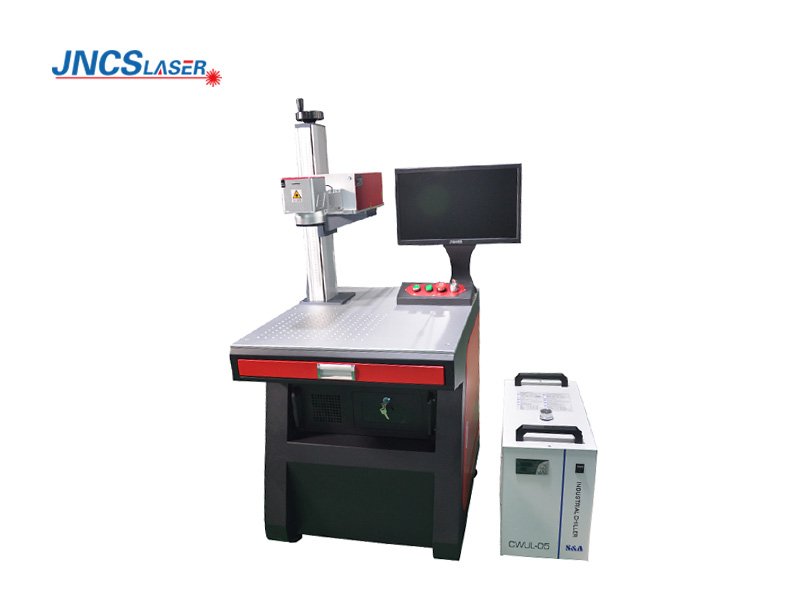
Advantages of UV Laser Marking on White Plastic Parts
Advantages of UV Laser Marking on White Plastic Parts
High Precision and Detail:
The UV laser can create extremely fine marks on plastic surfaces, even on very small parts, such as microchips, electronic components, or cosmetic packaging.
High-resolution graphics or text with crisp, clean edges, ensuring that even the smallest details are sharp.
No Heat Impact (Cold Marking):
UV laser marking works on the principle of cold marking, meaning it generates very little heat, which makes it ideal for sensitive materials like plastics that could be damaged by excessive heat.
This is particularly important for white plastics, as other types of lasers (like CO2 lasers) can cause burning or discoloration. UV laser marking prevents this, leaving the white plastic unblemished.
No Consumables:
Unlike other methods such as ink printing or labeling, UV laser marking does not require consumables like ink, chemicals, or labels, making it more environmentally friendly y cost-effective over time.
Non-Contact Process:
UV laser marking is a non-contact process, meaning there is no physical interaction between the machine and the plastic part, reducing the risk of surface damage or deformation.
Permanent Marking:
The marks made by UV lasers are permanent, meaning they will not fade, peel, or wear off over time. This is especially beneficial for product traceability, branding, and regulatory compliance.
No Chemical Pollution:
UV lasers mark without chemicals or toxins, making them safe for both the environment and workers in manufacturing areas, particularly in industries that require compliance with safety and environmental standards.
High-Speed Production:
The UV laser marking machine is capable of high-speed marking, enabling large volumes of white plastic parts to be marked quickly without sacrificing quality.
This is especially advantageous for mass production environments where efficiency is crucial.

 CN
CN Arkansas
 ES
ES RU
RU